Read my full article at Academia.edu, although it was originally published Red Rising Magazine and reprinted with permission in “Our School/Our Selves” from the Canadian Centre for Policy Alternatives. “From my perspective, indigenous studies is about creating allyship between natives and non-natives, but for everyone to be close to ‘being in the same place’ and […]
Category: Culture
1st Teaser for Our Upcoming Documentary “Forget Winnetou!”
“Forget Winnetou: Going Beyond Native Stereotypes in Germany” is an upcoming documentary by Timo Kiesel & Red Haircrow. Exploring themes of racism, stereotyping and erasure that Native Americans face living and working in Germany, despite German fascination with the indigenous peoples of North America. Website: https://forgetwinnetou.com/ Twitter: https://twitter.com/forgetwinnetou/ Facebook: https://www.facebook.com/forgetwinnetoufilm/
The Love of Stereotypes: It Starts Early In Germany, too

Because many “others” “foreigners” specific ethnicities, and in this case “Indianer” or Native American Indians are only presented in shows, as entertainment, as costumed figures who are there to entertain Germans in some way…stereotypes abound here, and are expected and even demanded. Often you see the same rapt look and desire: “Teach us! Show us! Make us laugh with wonder! Cry with excitement, shudder with amazement, dread, outrage (as to native treatment of the past)” but whatever it is, they want what they want.
For Native Americans they expect, with very clear stereotype guidelines, how you should look, speak, engage, too. If you don’t look, act or perform as they expect, they are disappointed, dejected and dissatisfied. You must meet their expectations or you are not “real”, you are not “authentic.” Continue reading “The Love of Stereotypes: It Starts Early In Germany, too”
Our “Conejitos Amarillos”-Poetry & Piano-Selected for Anibar #Animation Fest 2016, Peja, Kosovo!
Our video “Conejitos Amarillos” with original piano composition and performance by German jazz pianist Uli Lenz has been selected for the Kids Program at the Anibar Animation Festival in Peja, Kosovo, 21-25 August 2016! About the video: “Conejitos Amarillos” is a short energetic piece composed and performed by German jazz pianist Uli Lenz, combined […]
The #BorderPersonalityDisorder Connection & Extreme #NativeAmerican Hobbyism
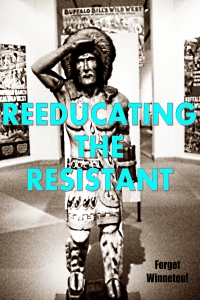 In the years of my observation and research on Indian hobbyists, whether personally or professionally, there are significant similarities between many of the most extreme in Germany, including their age group. Most often those born 1940-1970 or so, but can include others. As any social scientist can attest, those terrible events of Nazi Germany and WWII also had an effect on German society.
One was a need for escapism, conscious or unconscious, to a lesser or greater degree, and the avid interest and appropriation of other cultures, while still “being German” in their methods and mentalities. This is neither good nor bad, in and of itself. It is simply an after effect, but it does contribute to the sub-culture of Indian hobbyism and non-native “native” spiritualists.
Healthier personality types who more often came from homes with little or no abusive behaviors parentally or environmentally and who had positive reinforcement, may also have natural interest in other cultures but without attempting to “lose themselves” within them. Comparatively, those who grew up receiving frequent personal criticisms, for example, especially with added other stresses or abuses can develop a variety of psychological issues, one of which is borderline personality disorder.
Though having a name and description of the mental issue, behavioral traits aren’t always recognized, so the disorder (like others) can go undiagnosed or be “hidden” by the individual as long as their desires are satisified. When their desires and expectations are not? Behavior can quickly become emotive, extreme and shocking even to those closest to them. It is also frequently directed at those closest to them or those they feel closest to, whether or not having a relationship and/or connection to them (i.e. someone they perceive as a threat to their happiness, such as someone via Internet). In the particular case of hobbyists, native enthusiasts or “pseudo-Indians”, it is when the desire for validation, recognition or acceptance as their chosen culture is thwarted or challenged. Continue reading “The #BorderPersonalityDisorder Connection & Extreme #NativeAmerican Hobbyism”
 Red Haircrow
You must be logged in to post a comment.